

Australia's data centre shenanigans.
Justin Pyvis · 10 August 2026
Australia has abundant, cheap energy resources. Companies want to use those resources to power new data centres to underpin the AI boom. Its Energy Minister Chris Bowen has decided that's unacceptable. He intends to mandate that new data centres build their own renewable power rather than pulling from the grid or using fossil fuels, claiming it's in the "national interest":
"Our national interest, is that the data centres work within the constraints and the rules that the governments of Australia wish to place on them to bring their own new additional renewable energy backed by sensible firming arrangements.
A 'let her rip' approach, which my shadow minister was advocating on your program just a little while ago, a let them do whatever they want approach, would see bills go up, reliability go down, and data centres dominate the energy system in a way which is not in the national interest."
Bowen is right about local congestion. A data centre built in the wrong location can overwhelm local transmission lines, causing massive spikes in power prices that raise people's bills and reduce reliability. That's probably not in the national interest.
But just because such an outcome can happen doesn't mean it will. Regulating the entire country's data centres based on one hypothetical, as Bowen intends to do, is what's known as a secundum quid fallacy. It completely ignores grid economics and dismisses situations where a new data centre pulling from the existing grid works in, not against, the national interest.
For example, in a grid with surplus renewables generation a new data centre can actually reduce household bills by spreading fixed transmission costs, which comprise up to half of a typical Australian household's bill, across a larger base.
Data centres can also stabilise volatile daytime power prices by acting as a massive demand sink when solar output peaks, preventing prices from going negative (undermining generator viability). During peak price periods, data centres are able to cut their own consumption and use their backup batteries to feed power back into the grid when people need it most.
I'm not saying that will happen everywhere; local context absolutely matters. But Bowen's one-size-fits-all plan effectively guarantees that those positive scenarios can't exist. Worse, by blocking non-renewables from counting towards "new additional energy", such as gas in the Northern Territory, it ensures Australia might fail to fully capitalise on the AI infrastructure boom.
The binding constraint on AI today is electricity. Data centre developers don't have five years to wait for bespoke renewable farms to clear permitting and construction; they need gigawatts of reliable power right now. The Northern Territory's push for gas-fired power is exactly what the market is demanding: dispatchable baseload power. AI model training can't tolerate the intermittency of solar or wind without massive, expensive battery backups. In the US, developers are redeveloping massive coal plants into natural gas facilities just to power data centres, something that would be good for the environment and growth, yet is illegal under Bowen's rules.
Capital is mobile. If a data centre operator can go to Texas or Southeast Asia and plug into a non-renewables heavy grid (powered by Australian coal, uranium, or gas!), why would they waste their time waiting a decade for an Australian solar farm to clear local environmental reviews?
Bowen assumes tech companies are so rich that they will simply absorb the cost and delay of building new green infrastructure to gain access to the Australian market. He ignores that if you make it legally and economically unviable to build data centres in Australia, the investment will just flow to jurisdictions that give them what they need.
If made law, Bowen's policy risks shifting Australia's data centre boom into a bust.
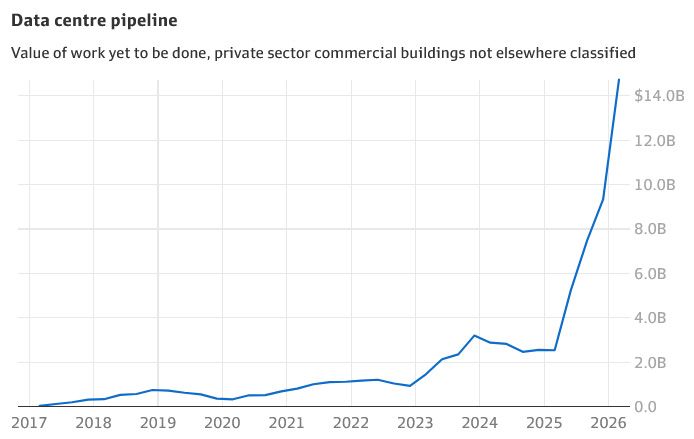
The Northern Territory and Queensland governments recognise the opportunity in selling energy to the highest bidders in the global AI arms race. Bowen favours optics over wealth creation, opportunistically using the AI boom to pressure cashed-up tech companies into cross-subsidising his renewables plan under the pretext of the "national interest".
As Charlie Munger said, "Show me the incentive and I'll show you the outcome." An energy mandate is a predictable but convenient option for Bowen: taxes and transfers show up on the budget; inefficient mandates do not.
Subscribe to the newsletter
Get new essays delivered to your inbox. No spam. Unsubscribe anytime.